Phoenix Pool Surface Repair
Pool Crack & Surface Repair in Phoenix, AZ
Surface cracks, hollow spots and loose fittings fixed so the new finish lasts.
Phoenix Pool Surface Repair
Surface cracks, hollow spots and loose fittings fixed so the new finish lasts.
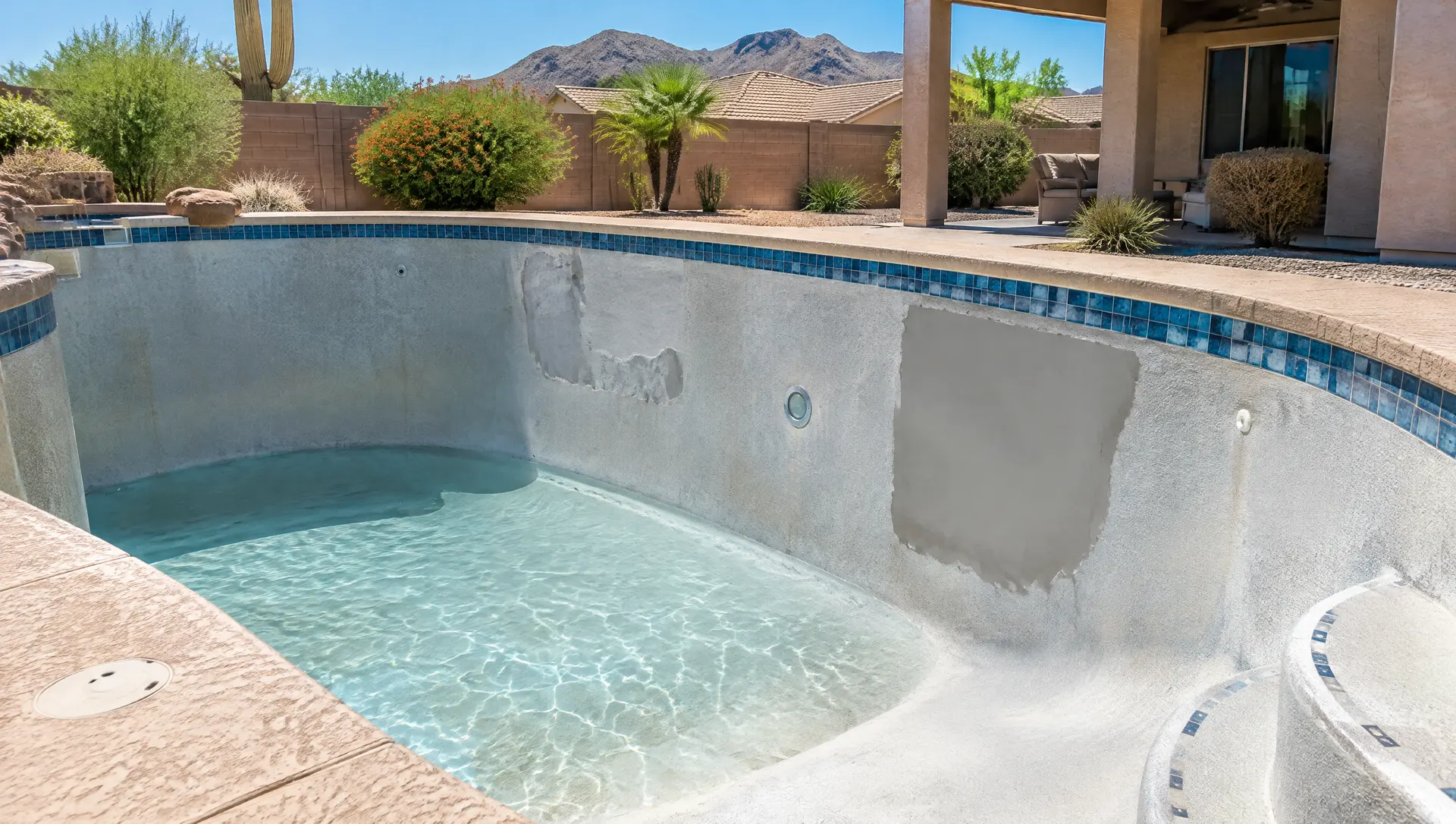
Most pool cracks we see in Phoenix are in the plaster, not the shell. Hairline checking, hollow spots and flaking plaster are common in older finishes and are repaired as part of a resurface.
Hollow plaster sounds dull when tapped. It has separated from the layer underneath and will keep flaking. We chip it out and patch the area so the new finish has a solid base.
Some cracks need more attention. A crack that runs through the shell or keeps growing points to a structural issue, and we'll tell you plainly if a repair is beyond surface work.
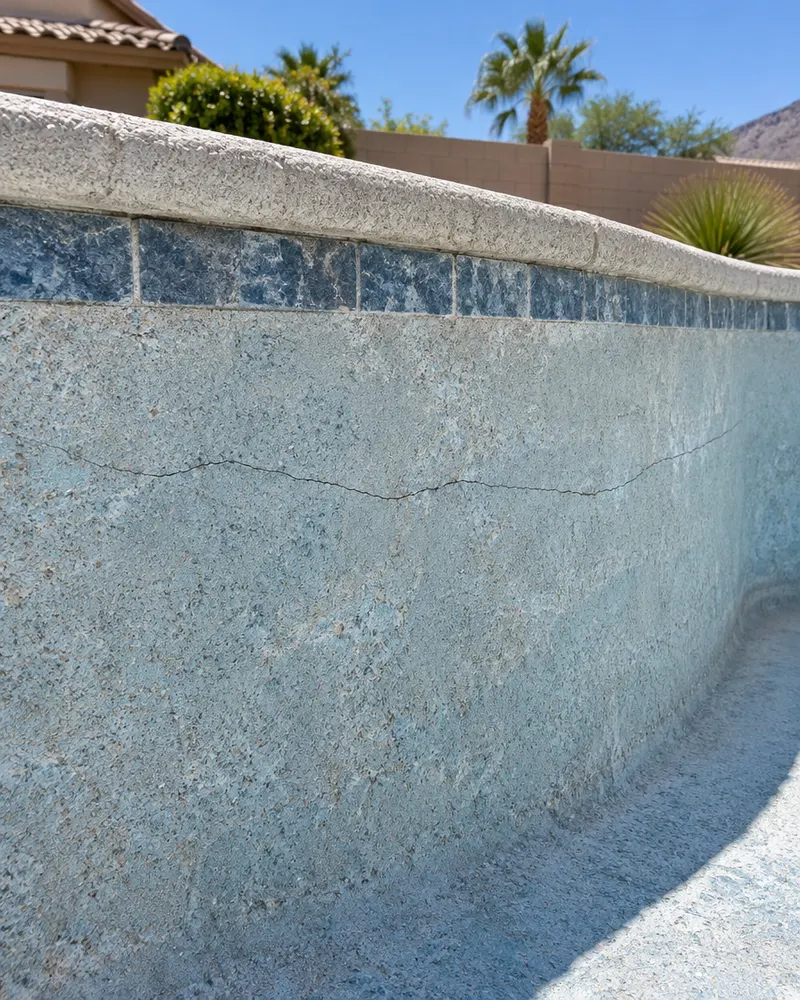
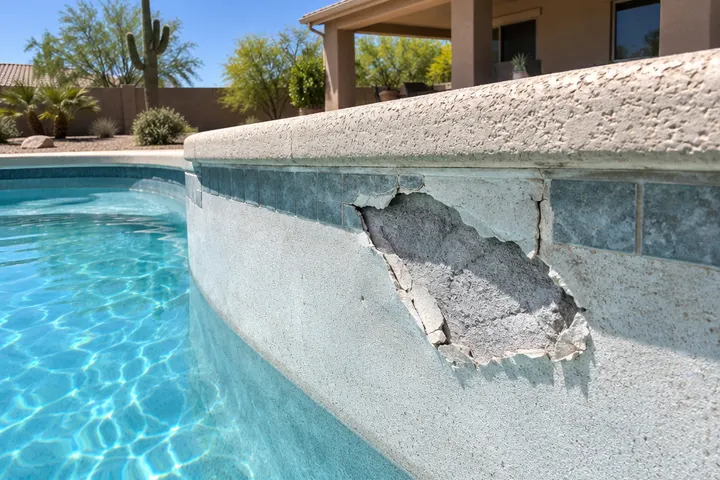
Plaster lifting and flaking away from the shell.
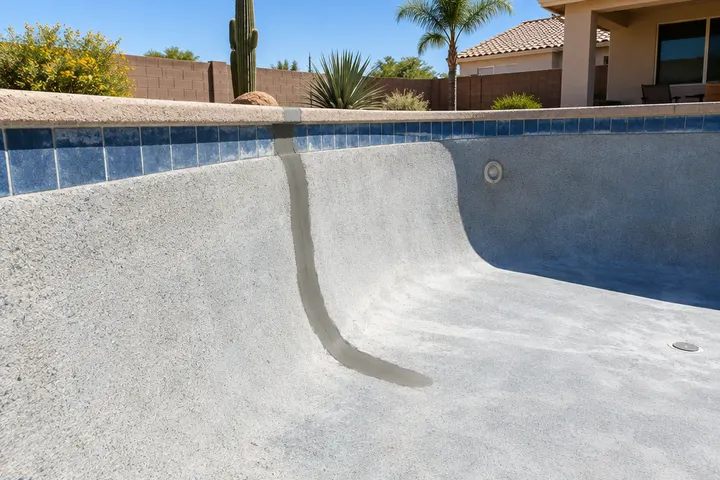
Cut out into a clean channel and filled with repair mortar.
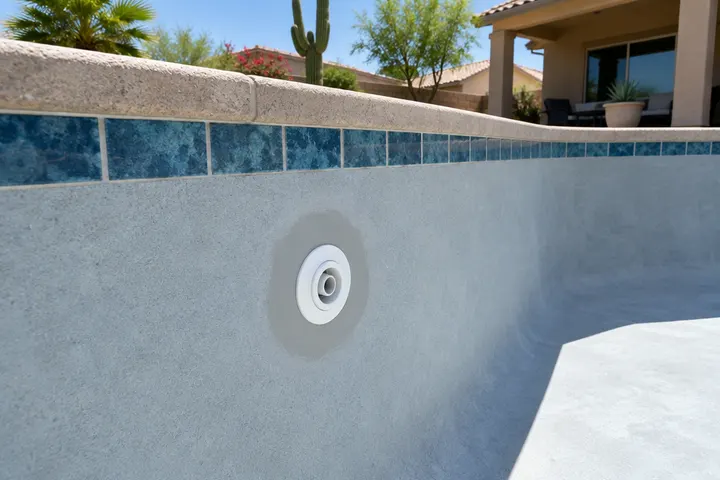
Return jets and lights re-set flush with the new surface.
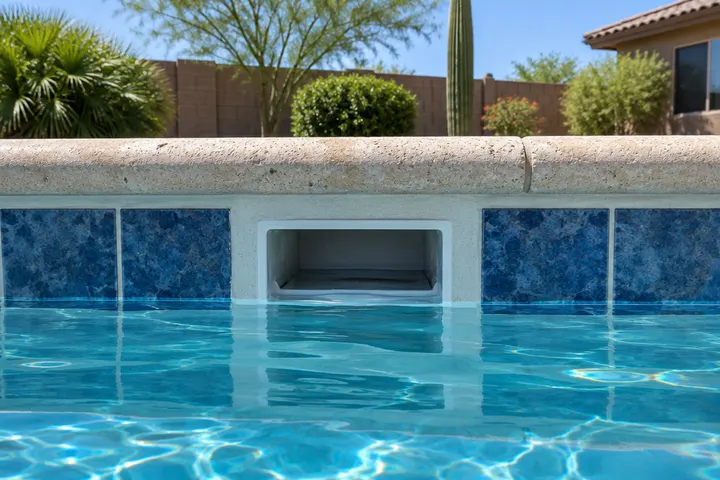
Cracked plaster and tile around the skimmer rebuilt.
| What you see | Likely cause | What we do |
|---|---|---|
| Fine web of hairline lines | Plaster shrinkage or age | Repair during the resurface |
| Hollow, drummy spots | Plaster delaminating | Chip out and patch |
| One long, straight crack | Possible shell movement | Inspect closely before resurfacing |
| Water loss with no visible crack | Possible plumbing or fitting leak | Recommend a leak test first |
Small patches are possible, but they rarely match old plaster. If the finish is worn anyway, repairing during a resurface gives a uniform result.
Phoenix pools lose a lot of water to evaporation, especially in summer. If loss seems high, a leak test before resurfacing tells you whether there's a plumbing or fitting leak to fix first.
We repair surface cracks and plaster. If we find signs of shell movement, we'll explain what we saw and recommend a structural evaluation.
Usually aging plaster losing its bond, or a past resurface that went over a poorly prepared surface.
Tell us what you're seeing on your pool surface. We'll inspect it and explain the repair.
Free estimate, no obligation