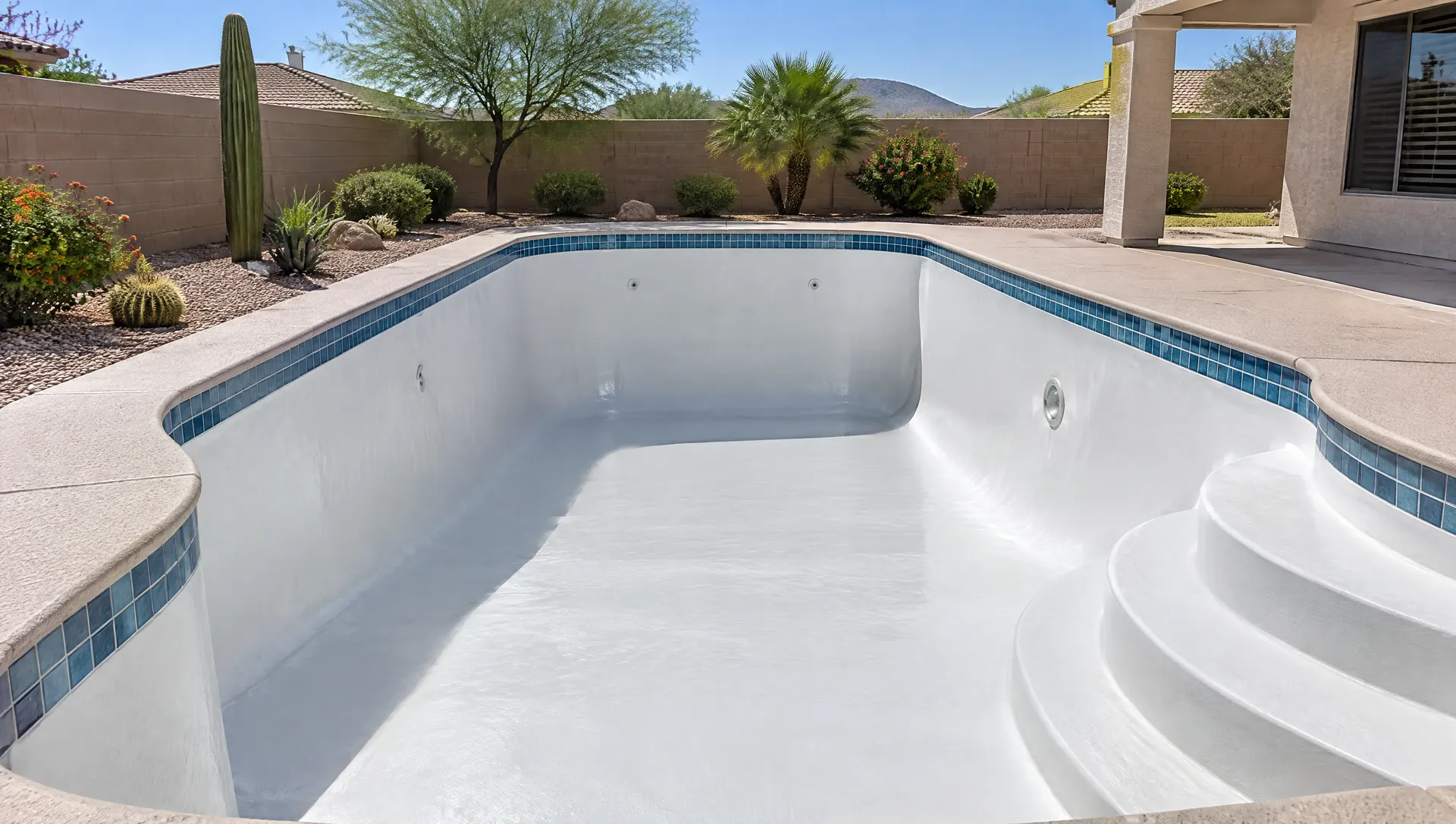
Phoenix Pool Replastering
Pool Replastering in Phoenix, AZ
A new plaster interior for pools that have gone rough, etched or stained.
Phoenix Pool Replastering
A new plaster interior for pools that have gone rough, etched or stained.
Pool replastering replaces the worn interior finish with a fresh coat of plaster. It's the most common way to resurface a pool, and it's the right call when the shell is sound but the surface feels like sandpaper or won't come clean.
Phoenix water is hard, and the sun runs pool chemistry hot for months. Plaster etches, picks up scale and fades sooner here, so many pools come due for a replaster well before their owners expect.
The City recommends sending no more than 12 gallons per minute into the cleanout, and less if the line is small or in poor shape. We watch the shower and tub drains while the pool empties and shut the pump off if anything backs up.
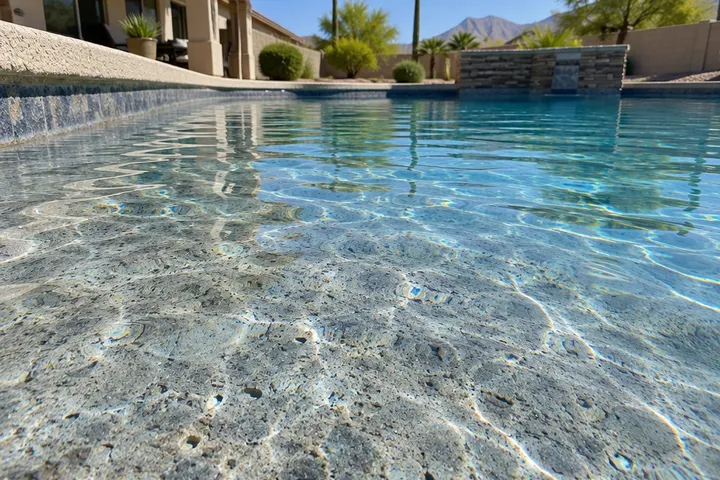
Rough, pitted plaster and gray mottling that brushing won't fix.
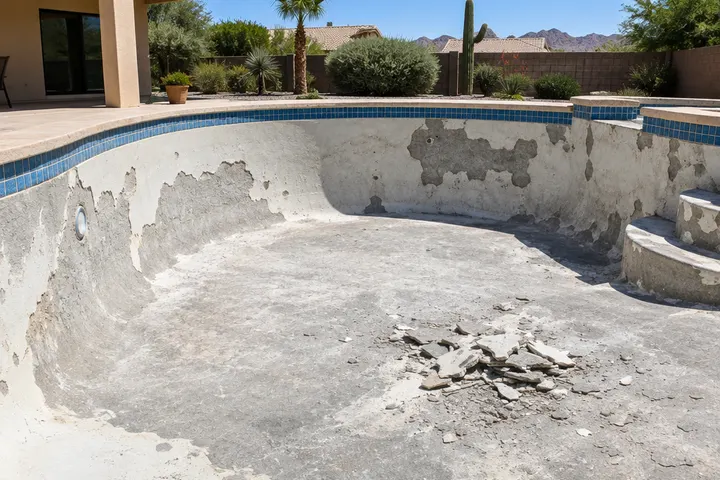
Loose and hollow plaster removed down to a solid base.
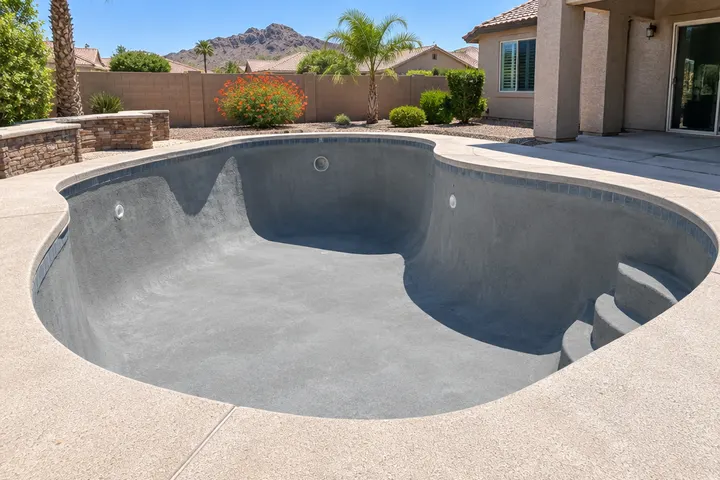
A bonding layer sprayed on when the old surface stays in place.
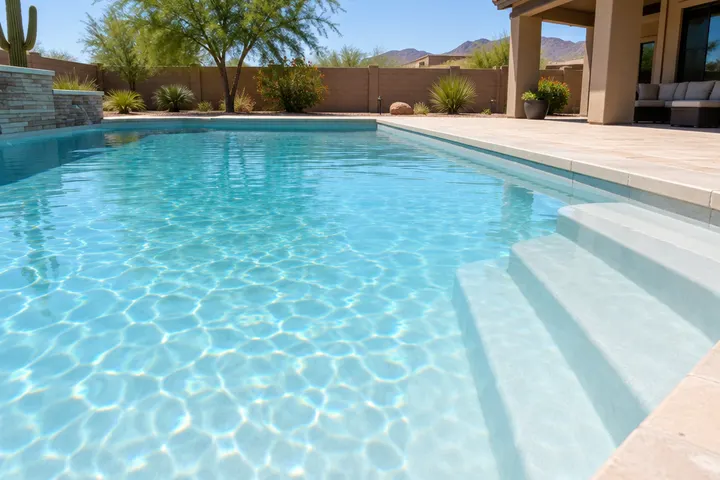
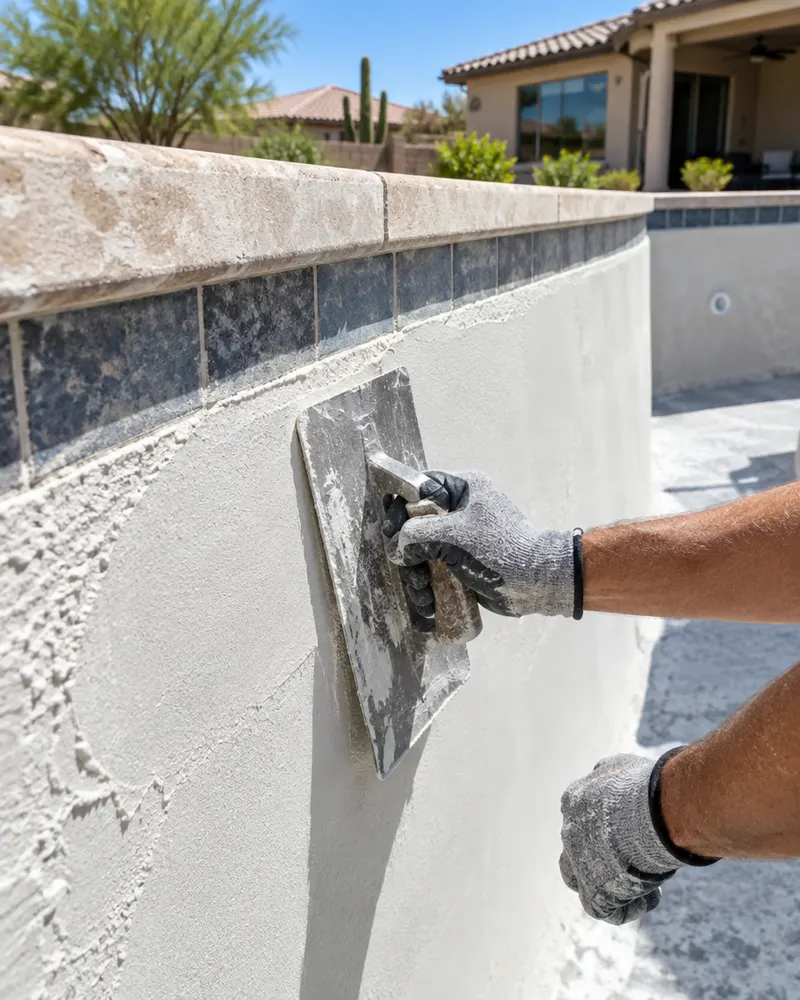
Smooth plaster troweled on in one continuous day.
| Chip-out | Bond coat | |
|---|---|---|
| What happens | Old plaster removed down to the shell | Old surface cleaned and coated so new plaster grips it |
| Best when | Plaster is hollow, flaking or layered thick | Old plaster is still tight to the shell |
| Pool depth afterward | Stays the same | A thin layer is added |
| How we decide | Tap testing and a look at past layers | Tap testing and a look at past layers |
Replastering means a new plaster coat. Resurfacing is the broader term and also covers pebble and quartz finishes. Prep and draining are the same for both.
Yes. White plaster gives classic light aqua water, and gray or blue plaster tints the water deeper. We bring samples so you can compare.
Stopping partway can leave a visible ring in the new plaster where the water line sat. We keep the hose running until the pool is full.
No. We handle the drain-down to your sewer cleanout as part of the job.
Tell us how your plaster looks and feels. We'll inspect it and send an itemized written estimate.
Free estimate, no obligation